
Volvo Buses
Malaysia
Autonomous buses
The vision of self-driving buses
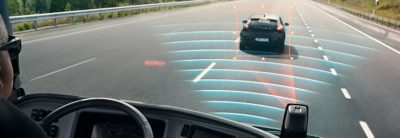
The first step towards self-driving buses is the introduction of automated functions such as driver assistance systems, safety features, and battery charging. Volvo is already running successful full-scale field trials with autonomous driving in controlled environments. But even if the technology for self-driving buses is already here, there are many other aspects to consider as artificial intelligence takes over vehicle control and decisionmaking. When the world is ready, Volvo will be ready too.
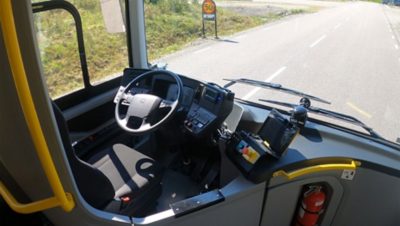

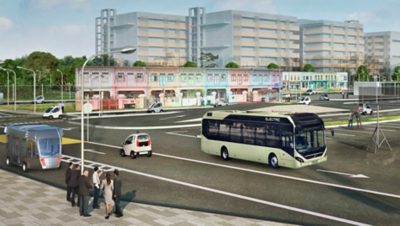
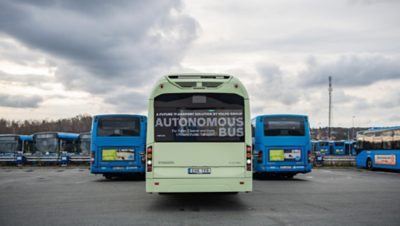
Roadmap towards self-driving buses
Autonomous buses in everyday traffic are still a thing of the future, but Volvo will be more than ready once driverless traffic is allowed. We are at the forefront, conducting our own research and working together with academies.
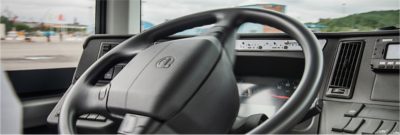
Automated driver support systems
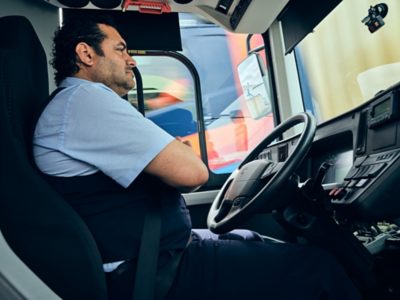
Already today there are several automated functions helping the driver to drive more safely and with fewer distractions. Systems for lane keeping and collision warning are fundamental features. These systems will be further developed and become more capable but they still require interaction with, and actions by, a driver.
Autonomous buses in confined areas
Today’s sensor technology allows for controlled and precise driverless progress. With connected functions, driverless vehicles can also interact with each other according to pre-defined algorithms. In confined areas such as depots or charging stations all the relevant parameters are known, and the buses can move around safely without human intervention.
Autonomous buses in traffic
For autonomous driving, the step from confined areas to everyday city traffic is huge and getting there will require careful implementation. One likely initial application is Bus Rapid Transit, where the buses have dedicated lanes free from other road users. With fewer parameters for the automated systems to handle, BRT will be an important real-life validation arena for autonomous driving.
Milestone self-driving bus technologies
Autonomous driving requires technologies of different kinds. Smart algorithms, reliable sensors, superfast data communication and fail-proof mechanical subsystems are just a few examples. Volvo continuously develops and deploys functions and features that will become part of future systems for autonomous driving.




Want to find out more?
Talk to a sales person
Find a Volvo sales representative dedicated to support you in fulfilling your daily duties as efficiently and profitably as possible.
Find a dealer
Volvo has one of the most comprehensive service networks in the industry, with more than 2,200 service points.